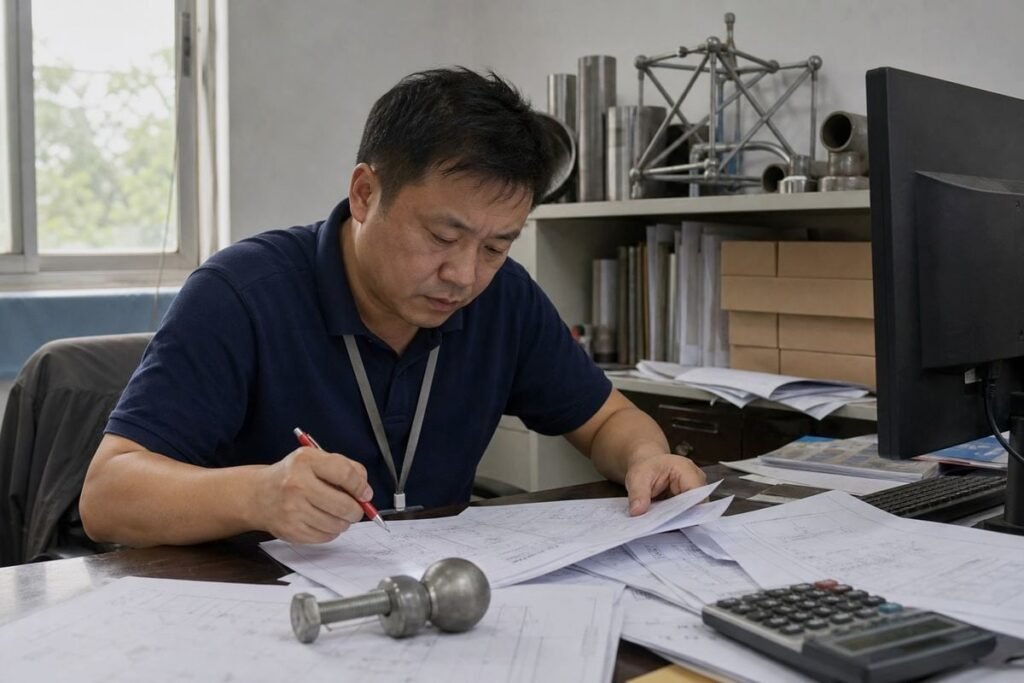
Spec substitution suggestions for steel grid structures land in my inbox weekly, and our Xuzhou engineering team has learned that one careless “yes” can quietly erase a project’s safety margin.
Treat every spec substitution for steel grid structures as a formal change request. Require a written application stating the reason, a before-and-after comparison, and full structural recalculation. Only accept equal-or-higher strength substitutes, get the original design institute’s written confirmation, and never approve verbal proposals.
That is the short answer. But the real work sits in the details: how you verify equivalence, what you ask, how you weigh cost, and what paperwork you demand. Let me walk you through each step, the same way we handle these requests inside our own [space frame](https://hbksteelbuild.com/steel-space-frame-installation-chinese-supplier-team-vs-local-subcontractor/) projects.
How can I verify if a supplier's substitute material still meets my project's structural safety standards?
A few years back, a fabricator on one of our overseas coal storage domes proposed swapping a specified tube for a "similar" section. Our recalculation showed a lower buckling reserve. We refused it.
Verify a substitute by demanding full structural recalculation from the original design unit. Compare yield strength, wall thickness, and load-bearing capacity side by side. Accept only equal or higher strength — never a downward conversion — and confirm the original safety reserve, service life, and acceptance criteria stay untouched.
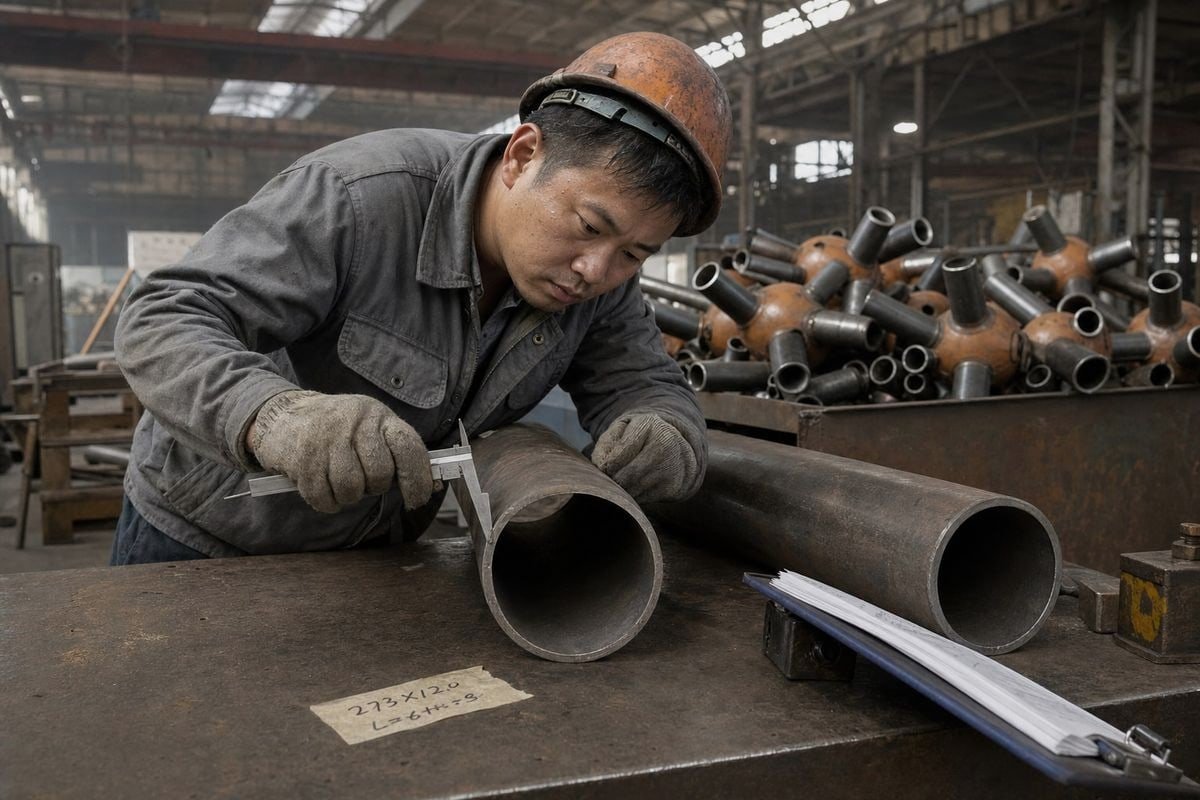
Verification is not a feeling. It is a documented, point-by-point comparison. In our practice, all substitutions must rest on one non-negotiable base: safety cannot be reduced. The supplier must submit structural verification data proving that. If they cannot, the conversation ends there.
Start with the four high-risk parameters
Be especially alert to changes in these four areas. In our experience delivering long-span space frame systems to Nigeria, the UAE, and Southeast Asia, these are where hidden downgrades hide most often:
| Parameter | Why it matters | What to check |
|---|---|---|
| Steel grade / material quality | Determines yield strength and weldability | Material Test Reports against ASTM or equivalent standards |
| Tube specification (diameter/section) | Drives axial and buckling capacity | Recalculated member capacity vs. original design |
| Wall thickness | Small reductions cut capacity sharply | Measured thickness, mill certificates, tolerance range |
| Paint / coating parameters | Controls corrosion life and maintenance cycle | Coating system, dry film thickness, environment rating |
The equal-or-higher rule
The rule we apply on every project is simple. A substitute is acceptable only at equivalent strength or higher than the original. A lower-strength conversion is never allowed, no matter how attractive the price or lead time. Some suppliers argue that "the total capacity still passes." That is not enough. The original safety reserve, the designed service life, the protection standard, and the acceptance indicators must all remain intact. Structural integrity is a system property. One weakened chord at a loaded node can shift stress paths across the whole grid. That is why a localized check — even Finite Element Analysis at critical grid intersections where stiffness changes — should back up the global recalculation before anyone signs off.
What questions should I ask before approving a spec substitution for my steel space frame roofing?
When a client in the Philippines forwarded us a substitution proposal from another vendor for review, the first thing our design office did was ask questions the vendor had never answered in writing.
Ask why the change is proposed, whether the raw material is truly unavailable, who bears any extra cost, and whether full recalculation exists. Demand a written change application with a before-and-after analysis, and require sign-off from the original design unit before approving anything.

The supplier's stated reason shapes your questioning. In our project files, substitution requests almost always fall into three motives: shortage, price, or fabrication convenience. Each one needs a different line of questioning.
If the reason is a raw material shortage
Shortage is the most common claim, and the easiest to abuse. Before you accept it, pin down three things:
- Confirm the shortage timeline. Ask exactly how long the material is out of stock, and whether the production schedule can shift instead. Often a two-week delay beats a permanent spec change.
- Require complete recalculation if substitution is truly unavoidable. Never let "it's out of stock" become an excuse for a unilateral downgrade.
- Put the cost burden on the factory. If the compliant substitute costs more, that increase should be borne by the supplier, not passed to you.
It also pays to verify the lead time claim independently. Check with a second mill or trader. If the material is available elsewhere at a workable date, the shortage argument collapses.
If the reason is price or convenience
If the factory says an "optimization" lets them lower the price, be highly alert. In our experience, a spontaneous discount usually signals a plan to shrink material specifications. Run the technical review first. Only then, based on how large the price reduction actually is, decide whether the deal makes sense. And if the supplier says the change is "just for easier fabrication," remember that easier processing often means simplified detailing. That still needs recalculation and written confirmation to prevent hidden de-speccing at connections and nodes.
Questions worth asking every time
- What exactly changes — grade, section, thickness, coating, or node detail?
- Has the Engineer of Record or original design institute reviewed this?
- Where is the before-and-after comparison analysis?
- Does the substitute preserve geometric compatibility with existing bolt ball nodes and connection assemblies?
- Who pays if the substitution costs more or delays delivery?
How do I evaluate the cost-benefit tradeoff when my supplier proposes cheaper alternative materials?
The trade-off I weigh most often is not price versus quality — it is a visible saving today against an invisible risk that surfaces years later on a 30-meter-plus span roof.
Run the technical review before looking at the price. Confirm the cheaper alternative preserves strength, safety reserve, and service life. Then compare the actual saving against recalculation costs, schedule impact, warranty risk, and lifecycle maintenance. Reject any saving achieved through reduced structural redundancy.

Genuine value engineering exists. We practice it ourselves when we design free proposals for clients — finding the most cost-effective member layout without touching the safety margin. But there is a hard line between real value engineering and disguised downgrading. The first optimizes geometry, fabrication method 1, or logistics. The second cuts steel grade, wall thickness, or coating quality and calls it "optimization."
Sequence matters: technical review first, price second
Our rule is strict on ordering. Never negotiate the discount before the engineering verdict is in. If the technical review passes, then — and only then — judge whether the size of the price reduction justifies the change effort. A one percent saving rarely covers the cost of recalculation, resubmittal, and re-approval. A meaningful saving on a large tonnage might.
A practical evaluation matrix
| Factor | Genuine value engineering | Disguised downgrade |
|---|---|---|
| Strength & yield strength | Equal or higher | Reduced, or "recalculated to just pass" |
| Safety reserve | Fully preserved | Consumed to enable the saving |
| Coating / corrosion life | Same system, same durability | Thinner film or cheaper system |
| Documentation offered | Full technical submittal 2, proactive | Verbal claims, brochures only |
| Who initiated the check | Supplier invites review | Supplier resists recalculation |
| Cost of the saving | Real efficiency gain | Reduced structural redundancy |
Count the hidden costs
A cheaper tube that fails inspection at the port, or a coating that needs repainting in five years in a coastal Nigerian climate, wipes out any upfront saving. Include in your math: potential schedule slippage during re-approval, warranty exposure, maintenance cycles, and the cost of your own engineers' review time. If the substitute raises the total cost of ownership, the "discount" is negative. And keep one contractual anchor firm: if a compliant substitute ends up costing more than the original, that difference belongs to the factory that proposed the change.
What documentation should I require from my supplier to confirm substituted specs comply with design codes?
A lesson we learned early in our export business: a WhatsApp voice note is not a change record. Our BV-certified design and production processes taught us to treat paperwork as part of the structure itself.
Require a written change application stating the reason, a before-and-after comparison analysis, complete structural verification calculations, Material Test Reports, and coating data. The package must be reviewed and confirmed in writing by the owner's original design unit before any fabrication proceeds.
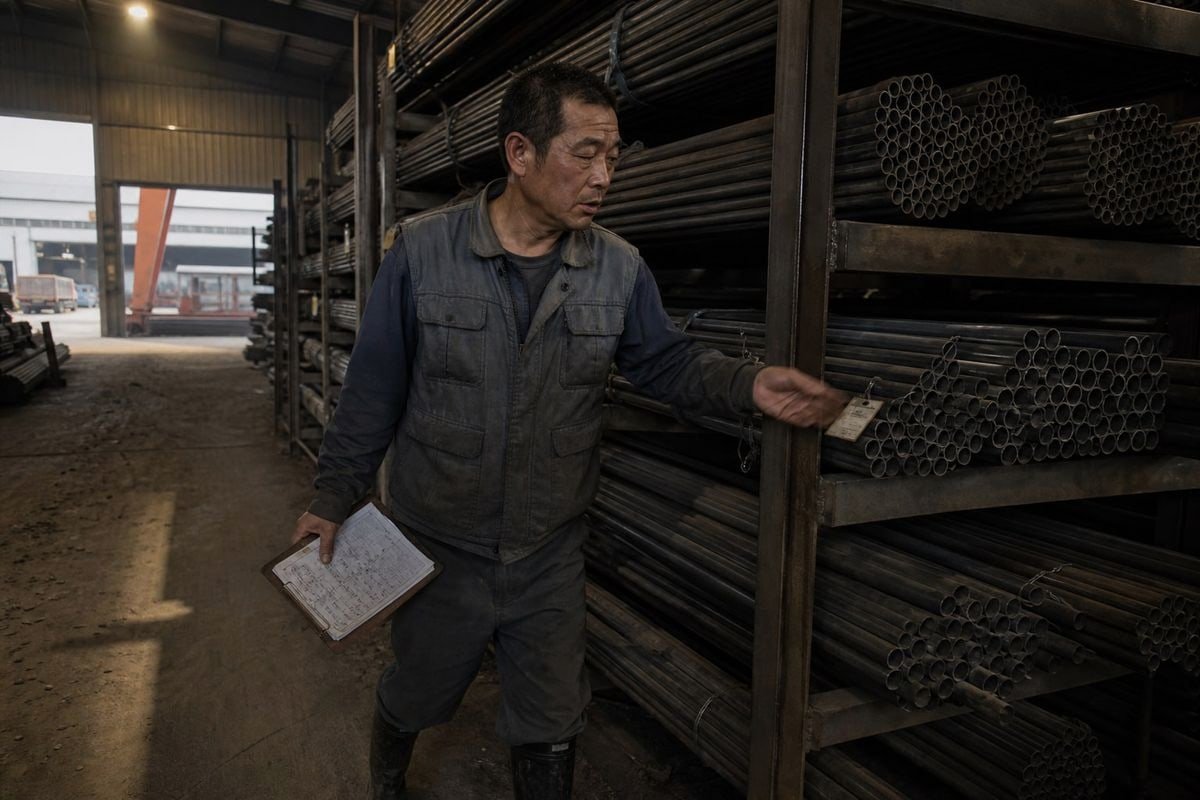
No substitution — none — should move forward before the supplier provides a written explanation and the owner's original design institute confirms it. That is the gatekeeping rule we apply on every space frame roofing 3 project we deliver, whether it is a cement plant storage dome in Tanzania or an exhibition hall in the Middle East. Verbal assurances, product brochures, and generic "meets spec" statements do not count as evidence of material equivalence.
The minimum submittal package
| Document | What it must contain |
|---|---|
| Written change application | Identification of the item, spec section, and the stated reason for the change |
| Before-and-after comparison | Point-by-point analysis of grade, section, wall thickness, and coating parameters |
| Structural verification report | Recalculation proving safety is unaffected; global check plus local node checks |
| Material Test Reports | Mill certificates confirming yield strength and chemistry against ASTM or equivalent standards |
| Coating documentation | System type, dry film thickness, and environmental exposure rating |
| Design unit confirmation | Written approval from the original design institute or Engineer of Record |
| Cost and schedule statement | Who bears any cost increase, and the impact on delivery dates |
Why the original design unit must sign
Only the original designer knows the assumptions buried in the model — the load combinations 4, the safety reserve, the deflection limits, the intended service life. A supplier's in-house check cannot replace that. The design unit's written confirmation also protects your legal position: if a dispute arises later, you hold a documented technical submittal trail showing the change was reviewed, justified, and approved. Keep every approval in the project record for closeout. On our projects we log each substitution decision, and increasingly clients feed this as-built data into their digital maintenance records, so the structure they monitor matches the structure that was actually built.
Conclusion
Substitution requests are inevitable; unmanaged ones are dangerous. Demand written applications, full recalculation, equal-or-higher strength, and design-unit sign-off — and your steel grid structure keeps the safety it was designed with.
Footnotes
1. Global authority for material standards and testing specifications used in steel fabrication. ↩︎
2. Construction process where shop drawings and material data are provided for approval. ↩︎
3. Structural system consisting of interlocking struts used to span large areas. ↩︎
4. International standards for structural design requirements and load combinations for buildings. ↩︎



Leave a Comment
Have questions about steel space frame structures, or insights from your own projects? We'd love to hear from you -- your comment helps others in the industry.