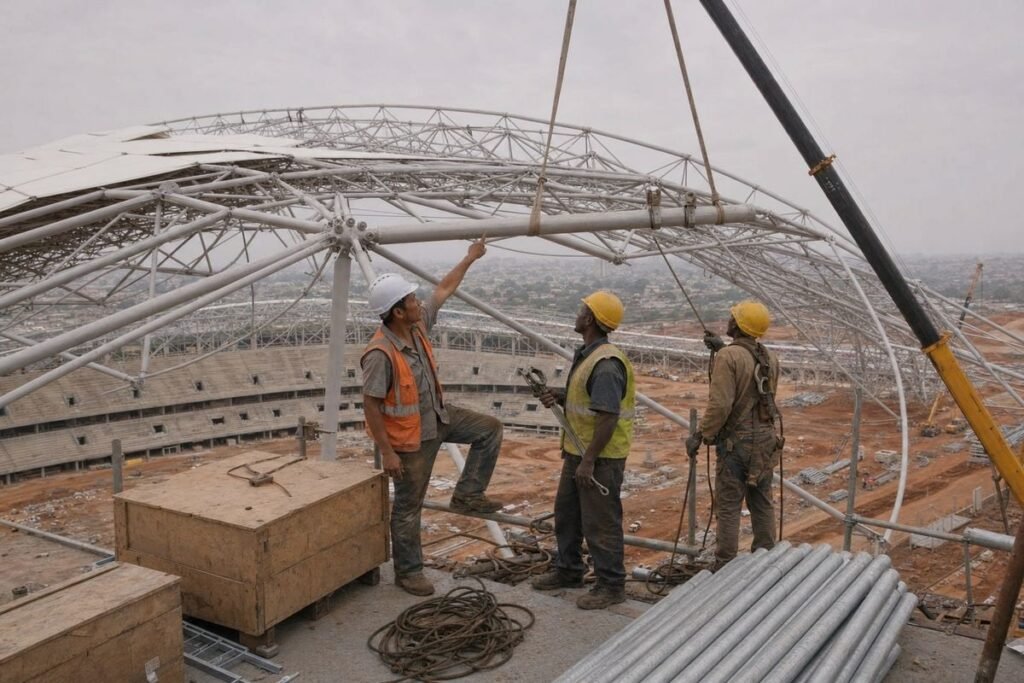
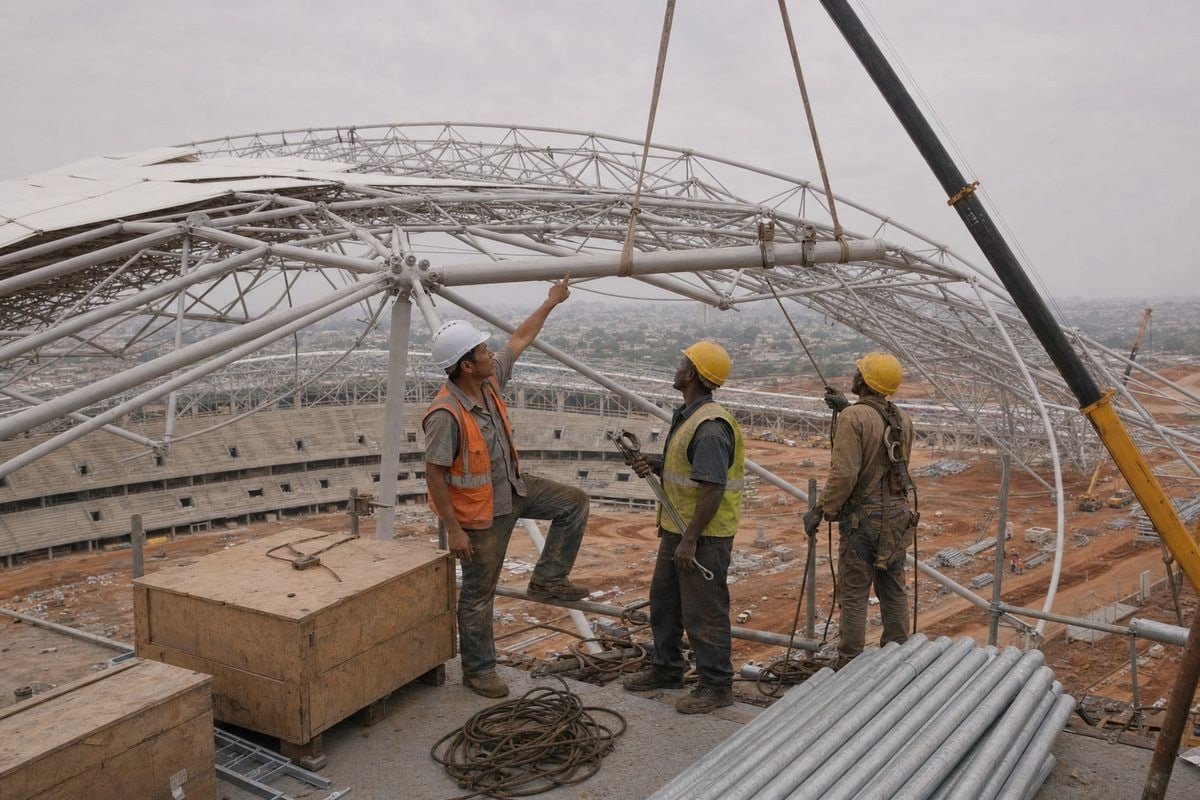
Steel space frame installation is where projects succeed or fail. I have watched owners lose months and six-figure sums after choosing the wrong erection team for a roof our factory built perfectly.
Neither option is always best. A Chinese supplier’s team suits complex, long-span, schedule-critical projects because it controls tolerances and sequencing. A local subcontractor suits routine projects with proven erectors. The strongest model is hybrid: Chinese engineers supervise on-site while a local crew installs.
That short answer hides real trade-offs. Below, I break down safety, cost, schedule, and quality one by one, using lessons from our own overseas projects.
How can I compare safety standards between a Chinese supplier's installation team and a local subcontractor?
On a coal storage dome project in Africa, our site engineer stopped a lift because the local crane operator skipped the rigging check. That moment taught me safety comparison is about systems, not nationalities.
Compare safety by auditing documented systems, not promises. Check each team's method statements, lifting plans, incident records, and third-party certifications such as BV or ISO. A supplier's crew knows the structure's risks; a local subcontractor knows local HSE rules. Demand written evidence from both.
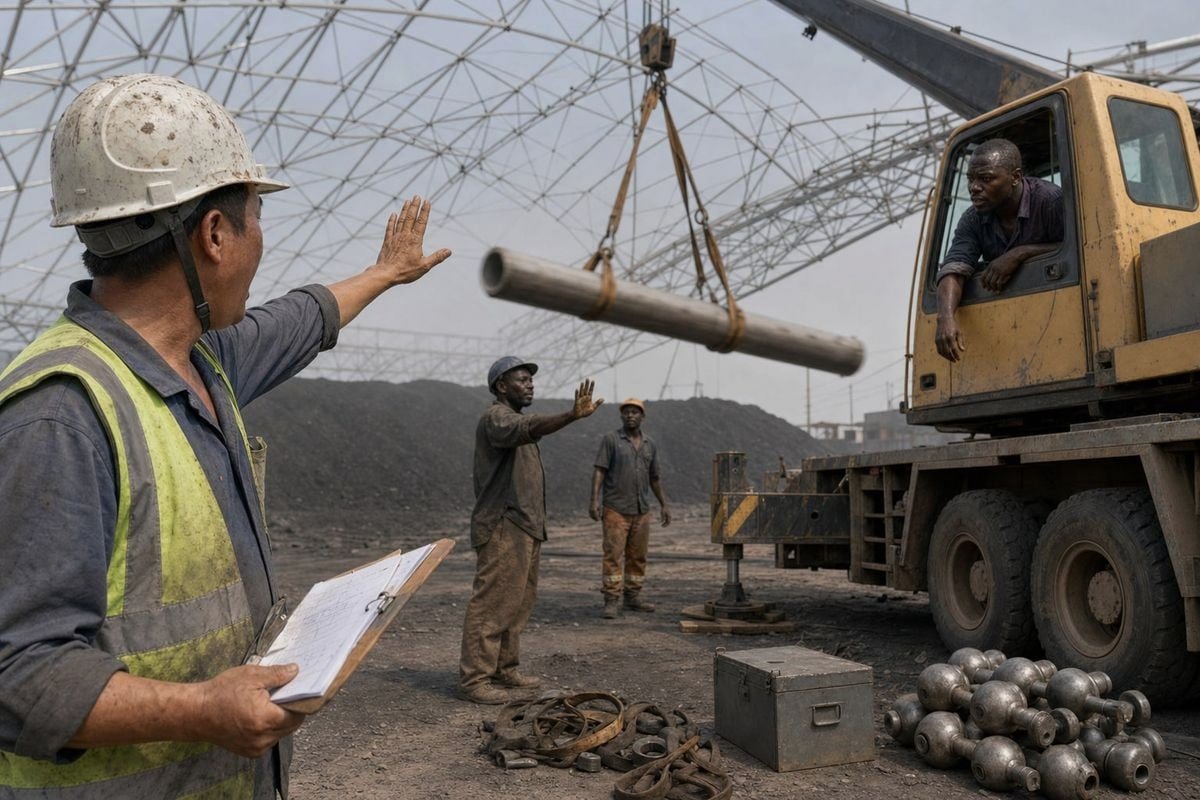
Safety on a long-span roof is unforgiving. A bolt-ball joint system spanning 30 meters or more means workers operate at height, over open spans, with heavy tubular members swinging on crane hooks. So the comparison has to be concrete.
What each side brings to safety
A supplier's team understands the structure itself. Our installers know which nodes carry temporary loads during erection, which sequence keeps the frame stable before it is complete, and how a half-assembled grid behaves in wind. That structural knowledge prevents collapse-type accidents. Our design, production, and installation capabilities are certified by BV (Bureau Veritas), which gives owners an independent benchmark rather than marketing language.
A local subcontractor, on the other hand, usually knows the regional OSHA/HSE framework 1, municipal inspection routines, and local building codes better than any foreign crew. That matters for permits and for day-to-day compliance with site rules the general contractor enforces.
A practical audit checklist
| Safety Item | Ask the Supplier's Team | Ask the Local Subcontractor |
|---|---|---|
| Structural erection risk | Erection sequence and temporary stability calculations | Experience with space-frame-specific sequencing |
| Certifications | ISO 9001, BV/third-party certification | Local licensing, HSE registration |
| Lifting operations | Lifting plan matched to node geometry | Crane permits and certified local operators |
| Incident history | Records from comparable overseas projects | Verifiable local references |
| Site compliance | Familiarity with your country's HSE rules | Daily toolbox talks in the local language |
The honest conclusion: structural safety standards favor the supplier's crew, while regulatory safety favors the local team. This is exactly why we usually recommend sending Chinese engineers for on-site technical supervision while a local crew performs the labor. The engineer anticipates structural risks 2; the local crew satisfies local compliance. Both gaps get closed at once.
What will it cost me if I choose a Chinese supplier's crew instead of hiring a local subcontractor?
Buyers often ask me for one number, and I always answer with two: the visible price and the total risk cost. When we quote EPC packages from our Xuzhou base, we show both.
A Chinese supplier's crew costs more upfront due to airfare, visa and work permits, housing, and mobilization, often adding 10–25% to installation cost. A local subcontractor is cheaper to mobilize but carries rework risk. Total space frame structure costs typically run US$30–80/m² depending on span and loading.
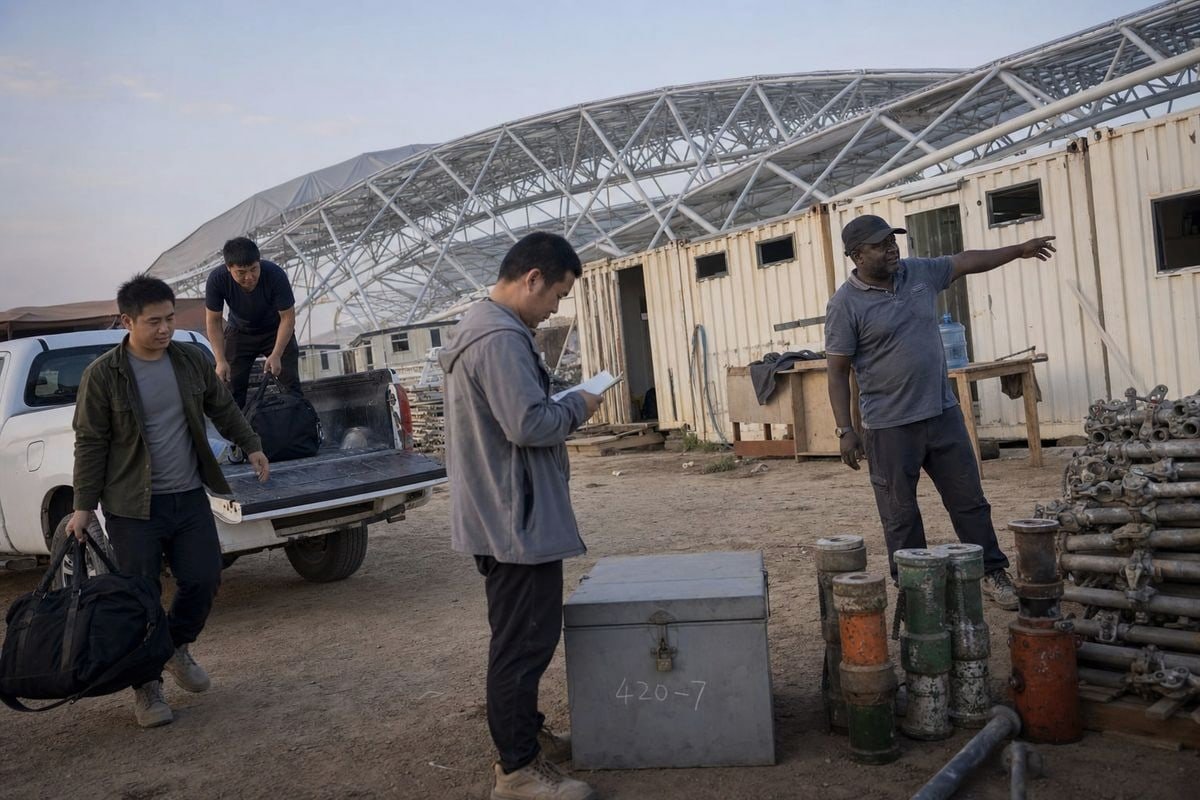
Let me break the cost picture into layers, because the sticker price misleads people constantly.
Direct cost comparison
| Cost Category | Chinese Supplier's Crew | Local Subcontractor |
|---|---|---|
| Base labor rates | Often lower per hour | Higher in Western/Middle Eastern markets |
| Mobilization costs | High: flights, visas, months of housing and transport | Low: crews are already in-country |
| Specialized tooling | Included, calibrated to node tolerances | May need to rent or buy hydraulic tensioning tools |
| Supervision | Built into the package | Owner may need to hire separate oversight |
| Rework risk | Low: crew knows the bolt-ball joint system | Higher if crew lacks space-frame experience |
| Post-installation support | Requires remote coordination | Strong: permanent regional presence |
The hidden cost most buyers miss
Rework on a long-span roof is brutally expensive. If a local erector misaligns embedded parts or torques high-strength bolts 3 out of sequence, correcting misfits at 25 meters height can erase every dollar saved on mobilization. One misconception I hear is that proprietary tooling is a minor issue. It is not. Many bolt-ball systems need tensioning tools calibrated to specific node tolerances, and local subcontractors rarely own them.
This is where the hybrid model wins on economics. Sending one or two experienced Chinese engineers costs a fraction of flying in a full crew, yet it protects you from the rework scenario. The local crew supplies affordable labor; our engineer supplies the structural steel fabrication 4 knowledge that keeps that labor productive. For most of our projects in Nigeria, the Philippines, and the Middle East, this arrangement delivers the lowest total installed cost, not just the lowest quoted cost.
Which option gives me better schedule control when installing a long-span steel space frame roof?
A power plant client once told me his previous roof stalled for six weeks waiting for a foreign crew's work permits. Schedule risk cuts both ways, and I want to be honest about that.
Supplier-led installation gives tighter schedule control on complex projects because fabrication and erection follow one integrated plan; comparable space-frame roofs have finished in as little as 74 days. However, visa delays or customs holdups can stall foreign crews, so a hybrid model with local labor hedges that risk.
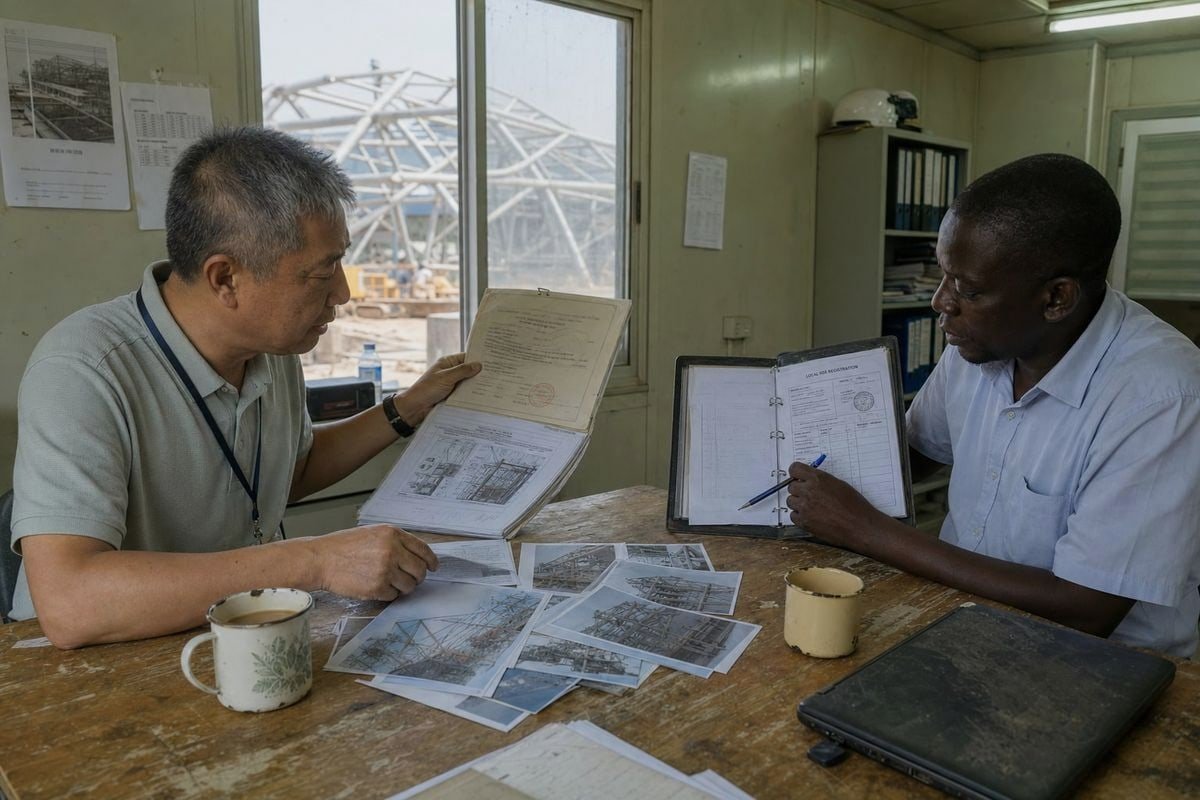
Project timeline management on a space frame roof depends on three things: how fast the team mobilizes, how fast it assembles, and how well it avoids stoppages. Each option scores differently.
Where each model gains or loses time
- Mobilization. Local subcontractors win here. They can be on-site in days. A foreign crew needs visa and work permits, flights, and accommodation, which can take weeks or months.
- Assembly speed. The supplier's team wins. Because most modern systems use bolted ball-joint connections, installation can proceed without site welding, and a crew that knows the system assembles it far faster. One space-frame roof expansion project was completed in a 74-day total construction duration under exactly this kind of specialist execution.
- Stoppage avoidance. This is the decisive factor. Experienced Chinese engineers can arrange the construction schedule rationally and, critically, predict problems before they happen. In our own practice, our engineers prepare contingency plans in advance for embedded-part deviations, crane availability gaps, and weather windows. An inexperienced local crew discovers these problems mid-erection, and each discovery costs days.
The geopolitical wildcard
I will not pretend cross-border execution is risk-free. Sudden visa denials or diplomatic shifts can halt a foreign-crew project indefinitely. That is a genuine black swan risk. Our answer is structural: keep the labor local and the supervision Chinese. If our engineer's travel is delayed, the local crew can continue preparatory works under remote guidance. If the local crew hits a technical wall, the engineer resolves it on the spot. Neither single point of failure can freeze the whole project, and the general contractor keeps skilled labor requirements satisfied from the domestic market.
How do I ensure quality and technical expertise if I use a local subcontractor instead of the manufacturer's own team?
Every drawing set we release from our design office carries embedded-part coordinates the civil contractor must hit within tight tolerances. Quality on-site starts long before the first tube arrives.
Ensure quality by requiring supplier on-site technical supervision, a detailed installation method statement, embedded-part acceptance inspection before erection starts, torque and inspection records for every high-strength bolt, and third-party QA checkpoints. A supplier engineer leading the local crew closes the expertise gap.
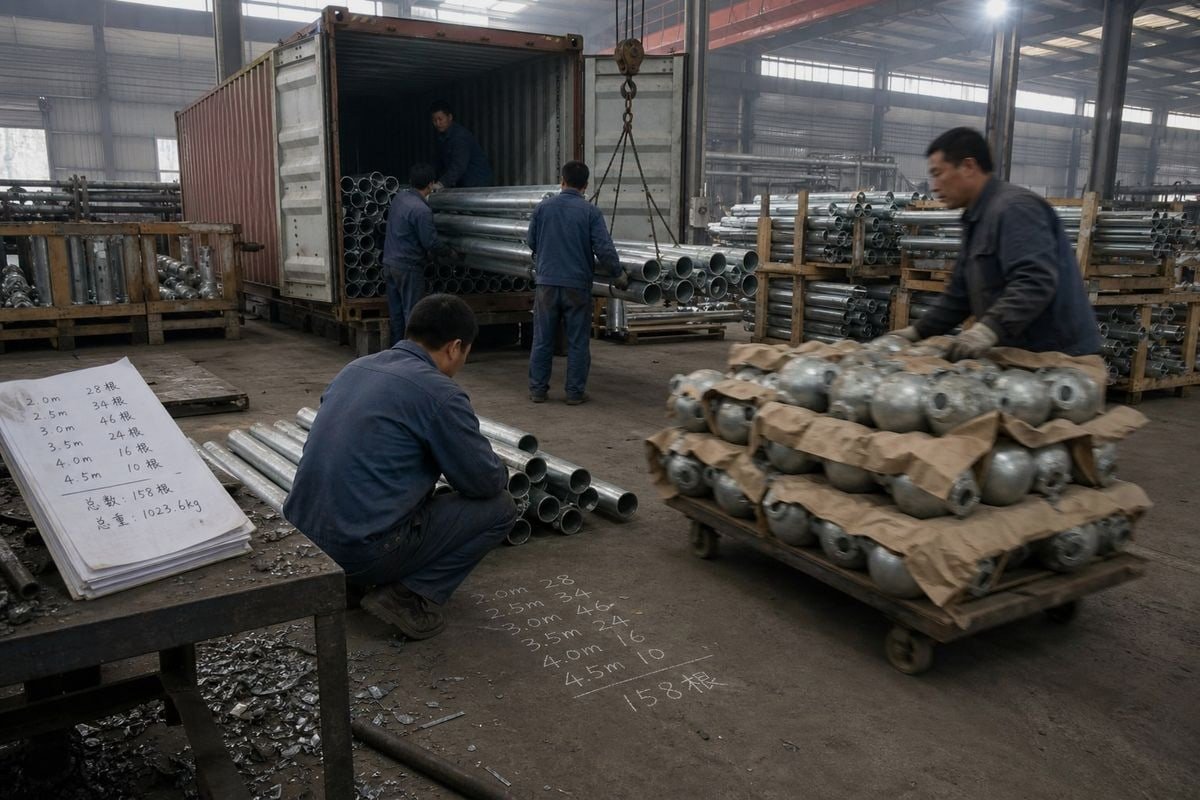
Space frame installation is a quality-control problem, not just a labor problem. Systems spanning 120 m+ without internal columns leave no room for sloppy geometry, because failure affects the entire clear span. Here is how to protect quality when local hands do the work.
The non-negotiable quality gates
| Quality Gate | What to Require | Who Verifies |
|---|---|---|
| Drawing coordination | Steel erector reviews civil drawings and embedded parts | Supplier engineer + GC |
| Substructure acceptance | Axes and embedded parts pass inspection before erection begins | Third-party inspector |
| Deviation management | Transitional steel plates and countersunk bolts for anchor bolt misalignment | Supplier engineer |
| Connection integrity | Torque control, sequencing, and inspection records per node | Local crew + supervisor sign-off |
| Final geometry | Survey of camber and alignment against design model | Independent surveyor |
Why supervision changes everything
Our standard recommendation, refined over years of exporting to Southeast Asia, Africa, and the Middle East, is this: we send Chinese engineers to the site for on-site technical supervision, leading the local construction team through erection. These engineers are deeply experienced. They arrange the schedule sensibly, anticipate problems before they surface, and prepare contingency plans in advance, which protects both progress and quality assurance protocols simultaneously.
The one genuine weakness is communication. Different languages and different working cultures can cause misunderstandings on a busy site. Our engineers carry translation tools as standard practice, but I still strongly advise clients to arrange a dedicated translator in advance. That single hire keeps toolbox talks, lifting briefings, and inspection handovers running efficiently. Some advanced suppliers now also sync on-site assembly progress with factory fabrication models digitally, so deviations get corrected against the original design intent in near real-time. Combined with a translator and disciplined documentation, a local crew under supplier supervision can match a full supplier crew's quality.
Conclusion
Choosing wrong risks delays, rework, and safety incidents. Match the model to your project's complexity, or use the hybrid approach: supplier engineers supervising a local crew, with a translator on-site.
Footnotes
1. OSHA provides safety regulations and standards that inform local building codes and site safety. ↩︎
2. Bureau Veritas provides risk assessment and structural safety inspections for large-scale construction projects. ↩︎
3. ISO provides international standards for high-strength bolts used in structural steel connections. ↩︎
4. Overview of the fabrication processes required for structural components like space frames. ↩︎



Leave a Comment
Have questions about steel space frame structures, or insights from your own projects? We'd love to hear from you -- your comment helps others in the industry.