

A weak technical spec list for steel space frame supplier quotes creates chaos. I have watched buyers receive five bids for five different structures. Our engineering team sees this weekly, and it always ends in delays.
To create a technical spec list for steel space frame supplier quotes, define project identity, scope, design codes, loads, geometry, structural steel grades, node systems, tolerances, coatings, testing, logistics, and commercial terms in numbered lines, so every supplier prices the exact same baseline without assumptions.
That sounds like a lot. It is not, once you break it into layers. Let me walk you through each layer, using what we see in real RFQ packages from Nigeria, the Philippines, the UAE, and beyond.
What information should I include when requesting a quote for a steel space frame supplier?
Last month, a coal bunker RFQ landed in our inbox with one line: ""price for 60m span roof."" Our factory in Xuzhou could not price that. Nobody honestly could.
Include project name, site location, structure type, scope of work, design codes, span and geometry, load data, material grades, node system, coating requirements, testing expectations, delivery terms, and required documents. If you have an architectural design scheme, attach it — it improves quote accuracy dramatically.

A steel space frame quote is not a quote for steel. You are asking a supplier to engineer, fabricate, test, ship, and often erect a three-dimensional structural system. So your RFQ technical requirements must capture project intent, not just tonnage.
Here is a point I want to stress from my own experience: beyond the basic project information, having an architectural design scheme makes everything better. When a client sends us even a preliminary architectural drawing, our design team can propose a geometric grid configuration, run Finite Element Analysis 1, and return a realistic budget within days. Without it, we are guessing — and so is every other bidder.
The Core Information Blocks
Organize your spec list the way suppliers actually build and price space frames. Use numbered lines grouped into blocks:
| Block | What to Include |
|---|---|
| Project identity | Name, site address, structure use (coal bunker, hangar, church, stadium) |
| Scope | Design-plus-fabrication or fabrication only; erection supervision; bolt supply |
| Design basis | Governing codes, wind, snow, seismic, dead and live loads |
| Geometry | Span, rise, bay spacing, module size, support conditions |
| Materials | Steel grades per component, bolt grades, coating system |
| Quality | Tolerances, weld criteria, inspection and testing scope |
| Logistics | Incoterms, packing, delivery sequence, lead time |
| Commercial | Price breakdown format, validity, payment terms, deadline |
Scope Clarity Prevents Change Orders
State exactly what the quote must include: engineering calculations, shop drawings, connection design, surface treatment, delivery, lifting plans, and as-built documentation. When scope is vague, one supplier includes erection support and another excludes it. You then compare numbers that mean different things. That gap becomes a change order later — and change orders on long-span structures are never cheap.
How do I compare technical specifications across multiple steel space frame suppliers?
A Nigerian client once showed me three bids for the same cement plant storage roof. The prices differed by 40%. The reason? Each supplier had quoted a different structure entirely.
Compare suppliers using a structured response matrix: require each bidder to answer identical numbered spec lines, confirm compliance yes or no, note deviations, and break down pricing by engineering, materials, fabrication, coating, testing, freight, and erection. Never compare headline prices alone.

The single biggest cause of a wide quote spread is not supplier pricing strategy. It is spec ambiguity. If your document does not fix the node system, one bidder prices bolted spherical joints while another prices welded nodes. Those are different products with different costs, different erection sequence plans, and different lifespans.
Build a Response Matrix, Not a PDF Pile
The best RFQ packages we receive use a spreadsheet with supplier response fields 2 that mirror the spec structure. Set it up like this:
| Column | Purpose |
|---|---|
| Item number | Traceability for every requirement |
| Buyer requirement | Your exact spec value or standard |
| Supplier response | What the bidder actually offers |
| Compliance (Y/N) | Forces a clear commitment |
| Deviation notes | Where alternatives are proposed |
| Remarks | Clarifications, exclusions, assumptions |
This format lets you compare bids line by line on compliance, not just price. It also flags weak suppliers early — the ones who leave fields blank or write ""as per standard practice"" are telling you something.
Separate Mandatory Items from Supplier Alternatives
Label critical values as mandatory. Allow alternatives only where substitution is acceptable, and only with written approval. For example, we sometimes propose an alternate structural steel grade — but only when it meets or exceeds the required strength, weldability, and certification level. If your spec does not say whether alternates are allowed, one bidder prices your exact design while another prices a cheaper, different system. That is not a comparison. That is a coin flip.
Check Qualifications, Not Just Numbers
Compare supplier credentials too. Ask for ISO 9001 certification 3 for quality management, evidence of at least 10 years of specialized space frame experience, and third-party verification. Our own design, production, and installation capabilities are certified by Bureau Veritas, and serious buyers always ask to see that documentation before shortlisting.
What load and material standards should I specify to get accurate steel space frame quotes?
When we calibrate a design for a Middle East project versus a coastal Southeast Asian site, the load and corrosion assumptions change everything — member sizes, node counts, coating systems, and ultimately price.
Specify dead, live, wind, snow, seismic, and thermal loads with local code references; define structural steel grades like Q355B, ASTM A36, or EN 10025 per component; require Grade 8.8 or 10.9 high-strength bolts; and mandate hot-dip galvanizing to ISO 1461 or an equivalent coating system.
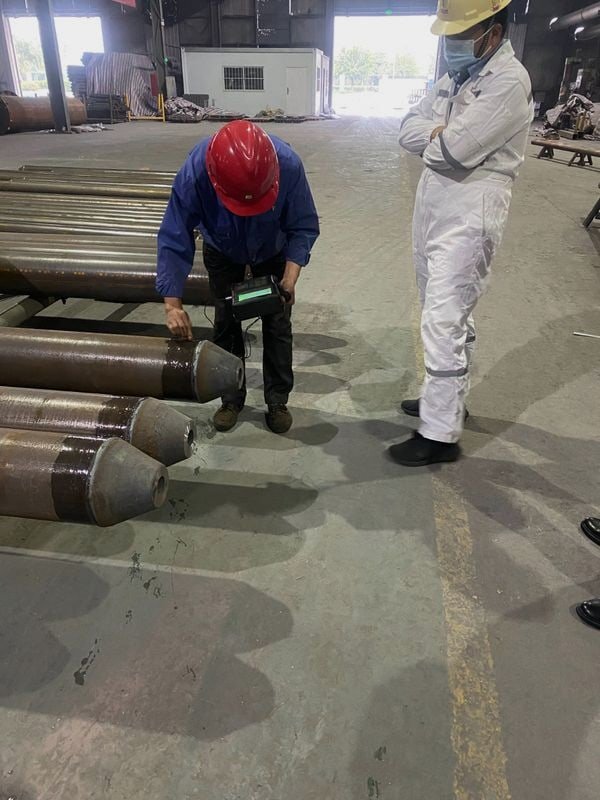
Missing or wrong load data causes under-engineering or over-engineering. Both cost you money — one through risk, the other through wasted tonnage. So the design basis deserves its own block in your spec list.
The Loading Criteria You Must Define
Cover the full loading picture, because space frames respond to combined effects:
| Load Type | What to State |
|---|---|
| Dead load | Self-weight plus cladding support details, ceilings, services |
| Live load | Roof access, maintenance, imposed equipment loads |
| Wind load | Basic wind speed, exposure category, local code |
| Snow load | Ground snow value where applicable |
| Seismic | Zone, site class, applicable seismic code |
| Thermal | Expansion range for long-span movement joints |
Also state deflection criteria explicitly. A span-over-250 limit and a span-over-400 limit produce very different structures. If a consultant has issued a design basis, reference it and require suppliers to state every assumption and exclusion in writing.
Map Materials to Components
Never write just ""steel."" Map each grade to each component type. For a typical bolted-ball space frame we produce, that means: structural steel grade for chords and web members (Q355B or EN 10025 equivalents are common), plate grades for gussets and supports, spherical bolt-ball nodes with defined mechanical properties, high-strength bolts 4 in Grade 8.8 or 10.9, and hexagonal sleeves. Require mill test reports and traceability records — we supply them on every export project, and you should never accept a quote that excludes them.
Corrosion Protection Drives Service Life
State the atmospheric exposure class and expected design life. Hot-dip galvanizing to ISO 1461 suits most industrial and coastal sites; multi-layer epoxy powder coating works where appearance matters, such as exhibition centers or shopping mall skylights. Specify surface preparation standard, coating thickness, color, and touch-up materials for site repair.
How can I avoid missing critical details when preparing my steel space frame technical spec list?
The hardest lesson from our export projects: the details buyers forget are rarely the big ones. They forget support conditions, connection responsibility, and who supplies the bolts. Then the claims start.
Avoid gaps by building the spec in layers — scope, design basis, geometry, materials, connections, coatings, QA, logistics, commercial terms — and applying one test: if a requirement affects material quantity, labor time, complexity, or site risk, it belongs in the spec list.
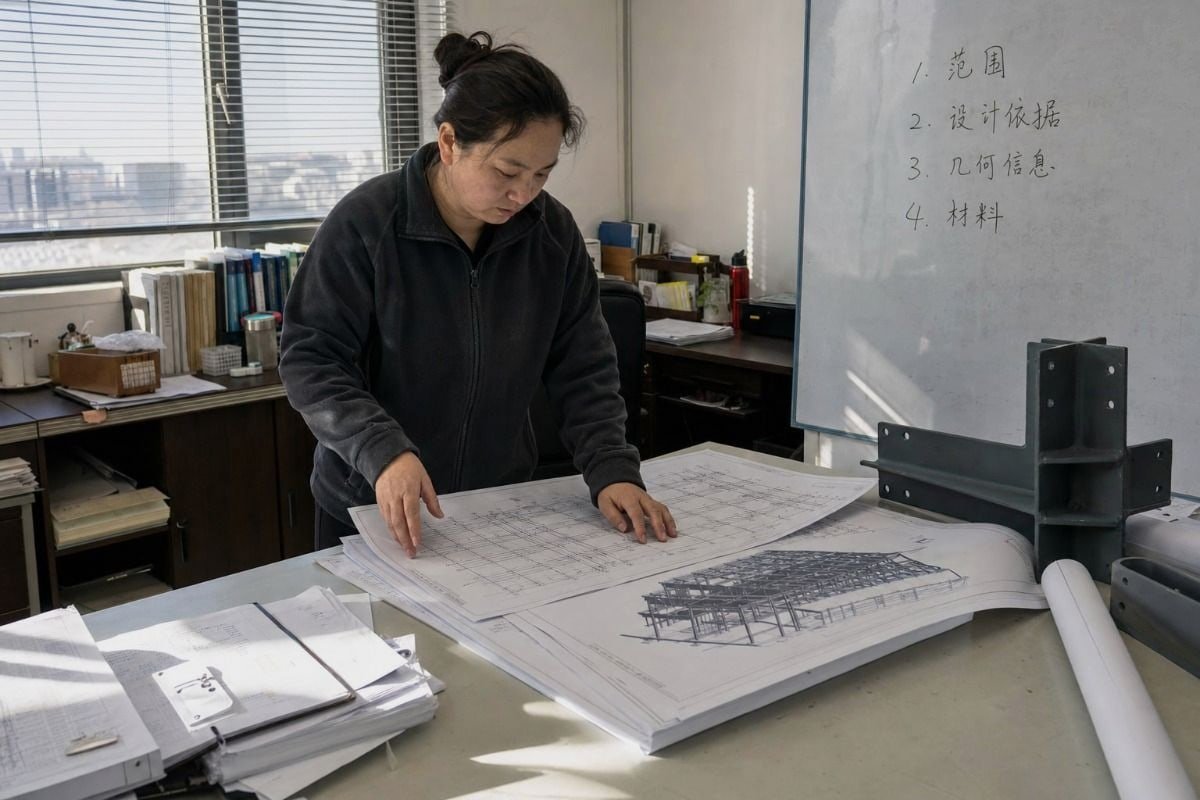
Vague requests produce vague quotes. The recurring errors we see in incoming RFQs are missing drawings, unclear revision status, vague material descriptions, no tolerance information, missing load data, and no scope statement. Here is how to close each gap systematically.
Use the Layered Checklist Approach
Build the document in this order, one layer at a time:
- Project identity and scope
- Design basis and codes
- Geometry and drawings — plan dimensions, span, rise, grid pattern, support conditions, camber
- Materials and certifications
- Nodal connection systems and fabrication requirements
- Coating and quality assurance
- Logistics and erection interface
- Commercial structure and response format
Treat Connections as Their Own Topic
Do not bury nodal connection systems inside general fabrication notes. State whether connection design is by you or the supplier, whether the node system is already selected, whether bolt pretensioning is required, and whether trial assemblies are expected. Connection choices materially affect price, the erection sequence plan, and constructability. On several of our hangar projects, the node system decision alone shifted the fabrication schedule by weeks.
Documentation, Testing, and Logistics Are Not Afterthoughts
Require a complete drawing submittal package: General Arrangement drawings, 3D structural framing plans, and a detailed Bill of Materials or Bill of Quantities. Define inspection scope — weld inspections, bolt tension verification, dimensional pre-assembly checks, and any nondestructive testing with method and acceptance criteria. For logistics, specify delivery sequence by erection zone, maximum transport dimensions, and whether you are buying loose components or preassembled submodules.
Match Detail Level to Project Stage
One fair objection I hear from buyers: ""This is too much paperwork for a budget estimate."" Agreed — at the early stage. A budgetary request can be slim: architectural scheme, span, structure use, rough loads, material grade, and finish. Just label it clearly as conceptual. The final tender package is where full depth becomes non-negotiable. Forward-looking buyers are also adding items like Design for Disassembly protocols, structural health monitoring sensors, and BIM digital twin deliverables — if you want these, say so in the RFQ, because they change engineering effort and price.
Conclusion
A precise technical spec list for steel space frame supplier quotes eliminates assumptions, aligns every bidder, and protects your budget. Build it in layers, attach your drawings, and demand structured responses."
Footnotes
1. Technical explanation of the numerical method used for structural analysis of space frames. ↩︎
2. Authoritative overview of the Request for Quotation process in procurement and engineering. ↩︎
3. Authoritative international standard for quality management systems in manufacturing and engineering. ↩︎
4. Official industry resource for standards regarding high-strength structural bolting and connections. ↩︎




Leave a Comment
Have questions about steel space frame structures, or insights from your own projects? We'd love to hear from you -- your comment helps others in the industry.